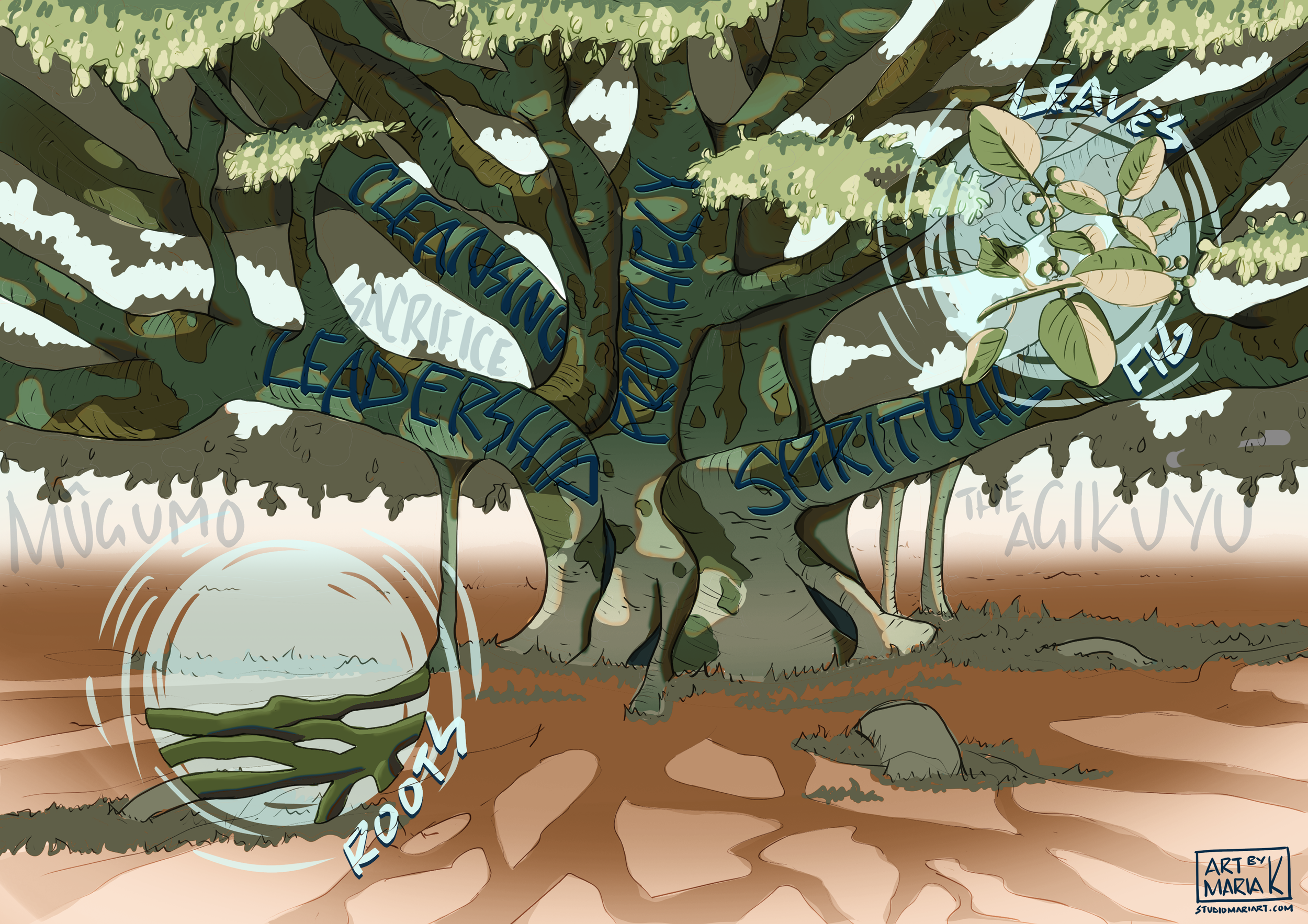
THE MUGUMO
Design Reparations commissioned us for a project by GNDR, an NGO network of grassroots organizations around the world. As part of their 2026-2030 strategy, they were calling for visuals connected to the metaphor of roots, mycelia, and the collaboration among plants for common resilience.
My Interpretation
The Mugumo tree (botanically Ficus thonningii, or Strangler Fig) is the most sacred tree in my culture, the Agikuyu. It is viewed as a shrine, a bridge to Ngai (God) and a dwelling place for ancestral spirits, serving historically as a site for community prayers, sacrifices, and blessings. It is strictly forbidden to cut down a Mugumo, use it for firewood, or clear it for construction, this would be considered a serious offence and taboo. Even the natural falling of a Mugumo tree is never taken lightly, it is traditionally interpreted as a divine signal of major change. Growing up in the Westlands area of Nairobi, I frequently encountered the famous 'Waiyaki Way Fig Tree', which stood at the centre of a small roundabout. It quickly became one of my favourite trees in Nairobi. During the expansion of the Nairobi Expressway, environmentalists saved the tree from being uprooted, and the highway project was rerouted. This shows how significant the century-old tree was to so many people. Though I have never seen or participated in activities around the Mugumo tree, I have heard several stories of its significance and 'powers' from elders in my community.